By Lizzie Stricklin, Communications Manager, BCSE
America’s energy industry is a driving force of not only our national economy, but international trade and economic growth as well. This winter, U.S. energy businesses have an important opportunity to provide feedback on U.S. trade policies as the Office of the United States Trade Representative (USTR) undertakes a review of the United States-Mexico-Canada Agreement (USMCA). This critical review will set the tone not only for North American trade, but for future trade agreements globally – and as such it is crucial that business perspectives are heard.
Last month, the Business Council for Sustainable (BCSE) hosted a webinar on the topic, with insight from BCSE members including the American Clean Power Association and the National Electrical Manufacturers Association. This blog provides key takeaways from the expert discussion, including how energy businesses can engage at this time.
What is the USMCA?
The United States-Mexico-Canada Agreement (USMCA) is a trade agreement that entered into force on July 1, 2020, during President Trump’s first term. As the successor of the North America Free Trade Agreement (NAFTA), the USMCA reinforces the trilateral free trade zone and covers nearly every sector of the international economy.
By July 1, 2026, the three parties are to conduct a six-year review of the agreement. As such, the Office of the United States Trade Representative (USTR) has been undertaking stakeholder consultations. This is key opportunity for U.S. energy businesses to advocate for themselves and for U.S. exports across North America.
Why is it important for energy businesses to contribute now?
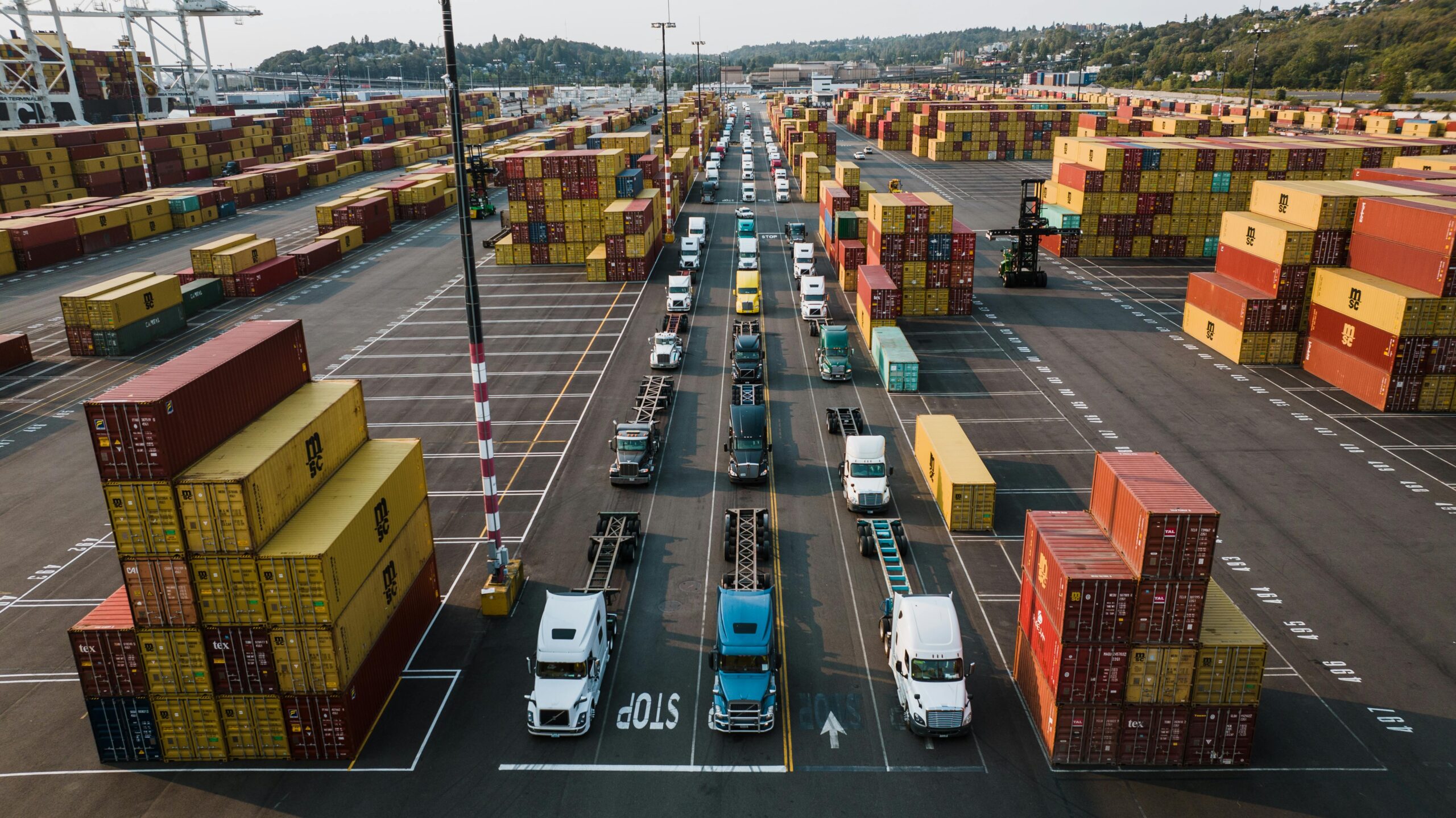
The energy industry is a global superpower, driving both imports and exports. The electric manufacturing industry alone is the second largest importer and exporter of manufactured goods in the United States – and over 40% of these exports come from Canada or Mexico, according to the U.S. Census Bureau. As such, it’s important to maintain the USMCA to ensure that the U.S. energy industry can support U.S. manufacturing, while also supplying and expanding the products supporting our energy infrastructure.
At the same time, electricity demand is predicted to increase by 50% by 2050, according to the National Electrical Manufacturers Association. The U.S. grid must undergo significant transformation in order to meet this level of demand. For necessary energy products like transformers, domestic supply only meets 20% of demand, according to 2023 research by Wood Mackenzie. The United States will need imported products to meet the oncoming load growth – and competitive trade policies are key to ensuring we have the supply we need.
The USMCA review process provides an opportunity for businesses to call for predictability in trade measures – and for provisions that will keep energy costs low. Businesses have faced significant uncertainty based on recent changes to the tariff regime, and these not only have an impact on private sector planning, but also on affordability. For example, a 25% tariff on onshore wind products could raise the LCOE for a project by 4%, according to research by Wood Mackenzie. Now is the time for energy businesses to come together and share these concerns with policymakers.
What are the priorities for the energy industry?
Coalitions like the American Clean Power Association and the National Electrical Manufacturers Association are leading voices on priorities for the review process. Together, the energy industry is calling for several provisions to be included in the USMCA review, including:
Swift review and renewal of the agreement. The energy industry supports the USMCA process and its role in supporting an integrated supply chain that powers North American competitiveness.
Policy predictability and preserving existing tariff commitments. Companies made long-term investments based on what they expected would be fairly stable duty levels outlined in the agreement. Our industries support a stable trade framework in which disputes between partners are addressed through existing mechanisms, with input from businesses. The private sector is most directly impacted by commercial matters and can support USTR as it seeks to reduce trade barriers across all economies.
Keep USMCA tariffs at zero. A hallmark of the USMCA has been zero tariff levels for most products that were manufactured in one of the three countries and moved across a border in the North American region. This provision has been key to driving U.S. manufacturing and growth. Plus, imports of products like transformers and wind turbine blades fill a crucial short-term role as U.S. manufacturing industries develop for these products.
Providing an off-ramp for 232-covered products. Section 232 tariffs are implemented for national security purposes after an investigation by the U.S. Department of Commerce. Duties are currently being imposed on a range of products including automotives and auto components; copper; and steel, aluminum, and derivative products thereof. Of note, most Mexican and Canadian exports are subject to a 50% tariff on the value of steel or aluminum. This is a cost that companies must pass along to consumers as their products cross the Mexican or Canadian border into the United States. The energy industry calls for negotiators to carefully consider 232 tariffs on products from Mexico and Canada, in line with the goals of the agreement.
Rethinking North American “competitiveness”. The energy industry and the Trump Administration share concerns about Chinese inputs and ownership of businesses involved in trade between these three countries. The USMCA review includes discussions around rules of origin provisions, and U.S. businesses are calling on policymakers to ensure the definition is workable, administrable, and does not place an undue burden on U.S. companies. The USMCA has historically been a template for many other trade negotiations, and as such its language on issues like rules of origin will be very important moving forward.
Lack of national treatment for U.S. energy investments in Mexico. U.S. companies are the most important investors in renewable energy in Mexico – designing, building, and running many energy projects. However, these companies have been treated in a way that is discriminatory relative to Mexican companies in certain cases, which is a violation of aspects of the USMCA. U.S. energy businesses are asking for fair treatment as investors in this sector.
Harmonizing standards. There is more alignment of electrical standards in North America than in other areas of the world, especially driven by the Council for Harmonization of Electrotechnical Standardization of the Nations of the Americas (CANENA). Nevertheless, Mexico has fallen behind significantly in terms of updating its standards for electrical installations. U.S. electrical manufacturers are calling for renewed harmonization around these updated standards, to ensure products sold into the market meet requirements.
Acting on transshipment. U.S. businesses call for better information sharing between Canada, Mexico, and the United States on potential transshipment issues in order to address bona fide cases as they occur.
What should energy businesses do now?
While the public comment period on the USMCA has closed, U.S. businesses that have concerns about the USMCA and have not already been in contact with USTR are urged to contact the Office as soon as possible. This is an ongoing discussion with USTR, and in the next year, the three governments will meet to conduct the official review process.
As drivers of North American economic growth, the U.S. energy industry’s insight is needed more than ever on influential trade policy like the USMCA. Our coalition looks forward to continuing to work with USTR to ensure trade policy provides business certainty, keeps costs low, and supports American energy expansion.
About the author: Lizzie Stricklin is the communications manager for BCSE.