In the spirit of the COP 30 Presidency’s call for a global mutirão – a collective effort to mobilize climate action – the Business Council for Sustainable Energy (BCSE) will lead a business delegation to COP 30 in Belém, Brazil that will bring forward credible solutions, partnerships, investments, and ideas to accelerate the energy transition and decarbonize agriculture, buildings, industry, and transportation. This case study is part of BCSE’s Granary of Solutions to deliver emissions reductions, increase resilience, and meet energy transition goals worldwide.
Highlights:
- New solid oxide electrolyzer cell (SOEC) factory in Denmark will manufacture technologies essential to decarbonizing energy-intensive industries
- When fully loaded, after 10 years the factory can service up to 10 GW installed capacity at customer sites, enabling the reduction of 15 million metric tons of CO2 annually, compared to hydrogen produced from natural gas
- The factory will employ 200 people, while also creating numerous indirect job opportunities through its supply chain, building, and maintenance
Case Study:
Topsoe, a global leader in carbon emission reduction technologies, signed a grant agreement with the European Union’s Innovation Fund for a total of € 94 million in recognition of Topsoe’s state-of-the art SOEC electrolysis technology and the innovation inherent in building its first-of-its-kind SOEC factory in Herning, Denmark. The factory is Topsoe’s single biggest investment to date.
The factory will manufacture advanced, energy-efficient Solid Oxide Electrolyzer Cells (SOEC) that are essential in the production of green hydrogen and its derivatives. Electrolyzers are key for decarbonizing energy-intensive industries like steel, mining, and long-distance transportation that account for approximately 30% of global greenhouse gas emissions and cannot easily be electrified. In Europe, the EU Commission has announced a proposal to deploy 40 GW of hydrogen electrolyzer installation and 10 million tonnes of green hydrogen production.
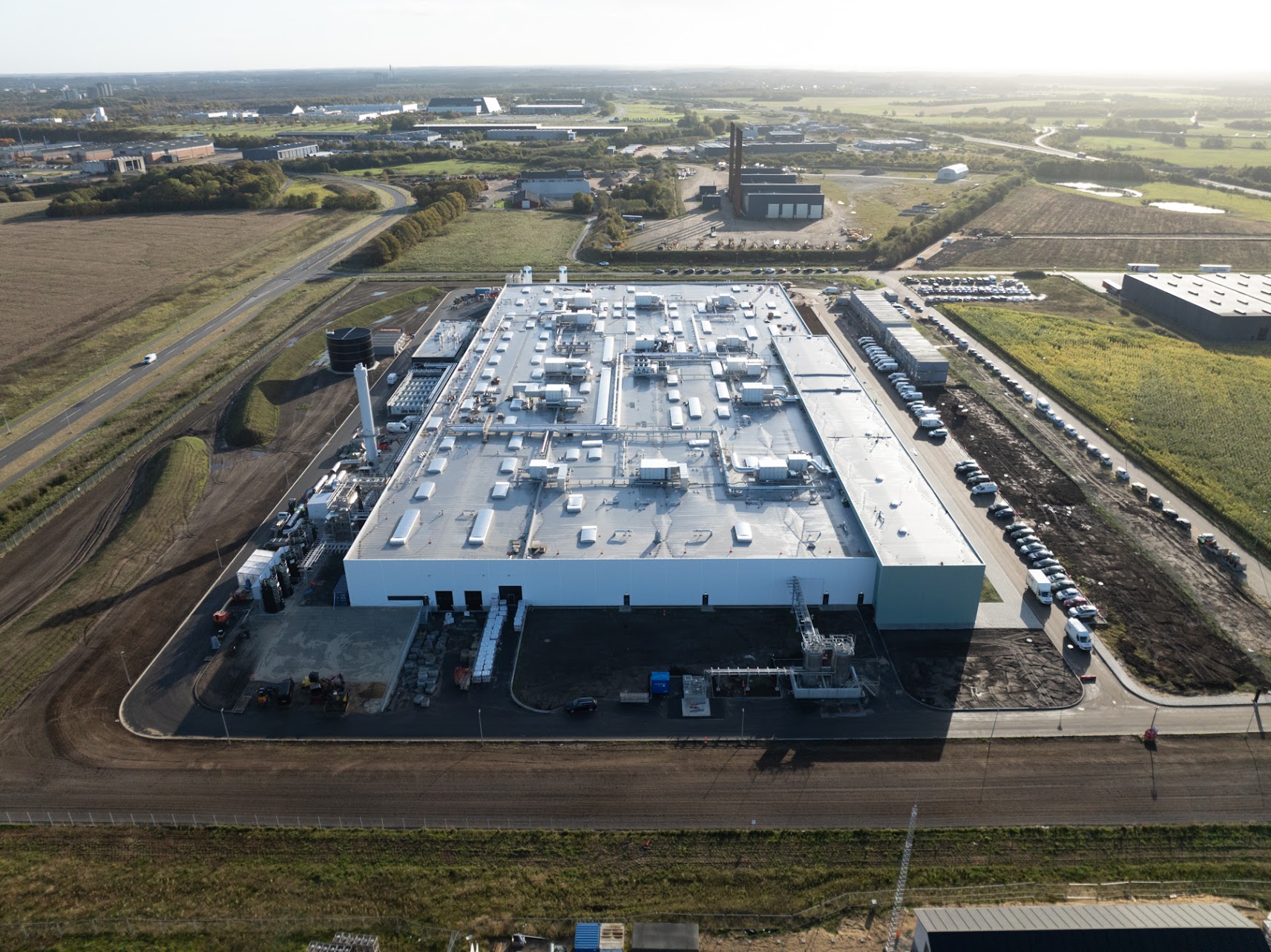
The factory is initially designed to manufacture 500 MW of electrolyzers each year. When fully loaded, after 10 years the factory can service up to 10 GW installed capacity at customer sites, enabling the reduction of 15 million metric tons of CO2 annually, compared to hydrogen produced from natural gas. This is equivalent to the annual emissions of nearly 3.5 million gasoline-powered passenger vehicles.
“I’m very proud that the Innovation Fund acknowledges our technology leadership and our decision to take the first steps in increasing European electrolyzer manufacturing capacity,” said Roeland Baan, CEO of Topsoe. “EU funding is key in supporting the industry’s endeavors to back the green hydrogen economy and contribute to EU’s 2050 climate neutrality target. We’re facing an immense task to decarbonize energy-intensive industries and long-distance transportation, and at Topsoe we’re doing our part. This grant from the EU demonstrates how public incentives and private innovation can bring us closer to net zero.”
“We’re incredibly honored to have been awarded such a prestigious grant,” said Kim Hedegaard, CEO of Power-to-X at Topsoe. “The energy transition demands careful use of resources to maximize outputs, and our SOEC technology is up to 30% more efficient than competing technologies. Our Herning factory is hopefully the first of many, enabling Topsoe to take a leading role in decarbonizing shipping, aviation, steel, and more industries. This is an exciting step for Topsoe, Denmark, and the EU.”