In the spirit of the COP 31 Presidency’s emphasis on its Action Agenda Priorities – the Business Council for Sustainable Energy (BCSE) will lead a business delegation to COP 31 in Antalya, Türkiye that will bring forward credible solutions, partnerships, investments, and ideas to accelerate the energy transition and decarbonize agriculture, buildings, industry, and transportation. This case study is part of BCSE’s Solutions Showcase to deliver emissions reductions, increase resilience, and meet energy transition goals worldwide.
Highlights:
- Lincoln, Nebraska achieved LEED for Cities Platinum, the highest level of LEED certification for its sustainability progress
- Increased renewable generation to 51% of its power supply
- Decreased greenhouse gas (GHG) emissions between 2011 – 2022
Case Study:
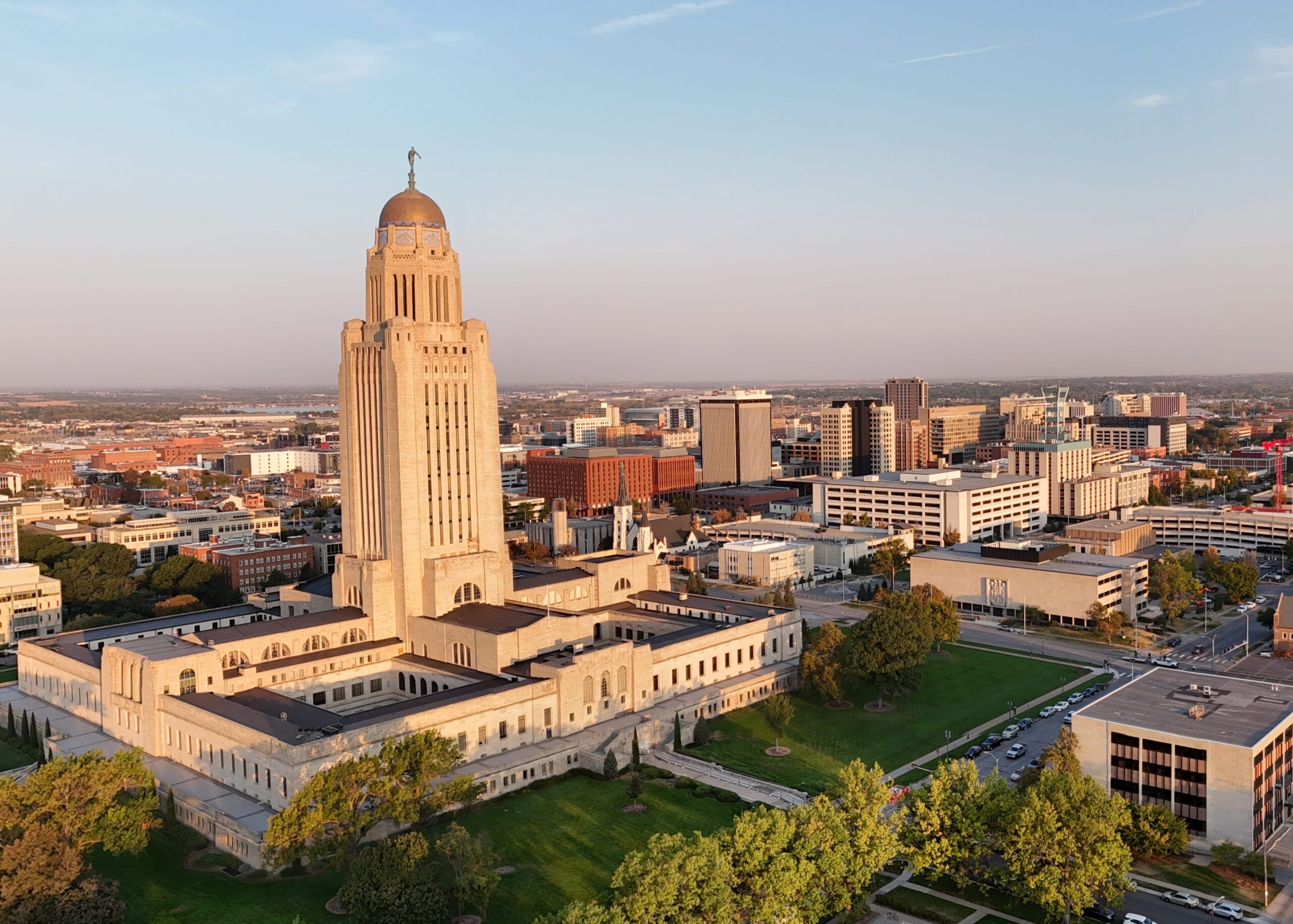
The City of Lincoln, Nebraska, achieved LEED for Cities Platinum, the highest level of certification, reflecting progress across a broad range of sustainability criteria. Its strongest results are in energy and greenhouse gas emissions: the municipally owned utility, Lincoln Electric System, has increased renewable generation to 51% of its total power supply, contributing to a 20% decline in GHG emissions between 2011 and 2022.
Lincoln’s certification was achieved by earning 83 of the possible 110 points available across nine categories as illustrated. Lincoln scored 10 performance points in the Energy and Greenhouse Gas Emissions category and notably, earned all points in the Energy Efficiency, Renewable Energy, Net-Zero Carbon and Climate Action, and Grid Harmonization credits. The City also scored highly in Quality of Life, earning all 6 performance points, and earning an additional 11 points across each of the optional credits. Maximum points were awarded in the Innovation and Regional Priority categories, illustrating a significant commitment to municipal innovation and collaboration. Lincoln achieved 8 or 9 points available in the Natural Systems and Ecology category, missing only 1 point in the Light Pollution Reduction credit. In the Materials and Resources category, the City earned 1 point available for the Special Waste Streams Management credit, and 3 points available in the Material Recovery credit. Lincoln is the first local government in Nebraska to earn LEED Cities certification.
The following highlights specific areas the City scored well:
- Clean Energy: Lincoln secured 26 out of 30 possible points in the Energy and Greenhouse Gas Emissions category, reflecting its performance in grid decarbonization, building energy efficiency, and collaborative utility management. The City earned 10 out of 14 points in the Energy and Greenhouse Gas Emissions Performance category, highlighting its partnership with its municipally owned utility, Lincoln Electric System. LES has a commitment to achieve a 100% net-zero carbon generation portfolio by 2040. In 2024, renewable resources met 45% of the total electricity sold by Lincoln Electric System. This supply was led by wind power at 35%, supplemented by hydropower at 8%, and solar and landfill gas each contributing 1%. When factoring in the city’s total combined energy consumption, which aggregates both electricity and natural gas heating, renewable resources successfully met 23% of Lincoln’s entire energy footprint. Supported by this utility-scale transition, Lincoln’s community-wide greenhouse gas emissions declined by 20% between 2011 and 2022.
- Green Spaces: Publicly accessible green spaces cover 20.3% of Lincoln’s land area (21.16 square miles), placing 89% of residents within a half-mile walking distance of a park or multi-use trail, earning both points available. The Haines Branch Prairie Corridor project is a cooperation with regional agencies to establish a 10-mile ecological and recreational corridor to restore native tallgrass prairie remnants between Pioneers Park and Spring Creek Prairie, which also earned 1 point in the Regional Priority category.
- Housing and Transportation Affordability: Lincoln secured 2 out of 2 points by pairing policy with supportive housing infrastructure. Under the city’s Affordable Housing Coordinated Action Plan, affordable units expanded at a rapid 140% compound annual growth rate since 2020, completing 3,201 of a target of 5,000 units.
- Quality of Life Performance: Lincoln scored 6 out of 6 points, driven by a high-school graduation rate of 93%, low regional unemployment, and exceptional air quality.
- Equitable Access to Social Infrastructure: Lincoln earned 3 out of 3 points by demonstrating equitable access to social services and infrastructure for low to moderate income residents and populations of color. In five neighborhoods with these populations, social services destinations such as parks, libraries, and grocery stores with a produce section within a half-mile exceeds the city as a whole.
- Municipal Innovations: Lincoln was awarded maximum Innovation credit, 6 out of 6 points by showcasing six unique local programs for 1 point each:
- Wastewater Effluent Utilization: The Central Renewable Energy System uses energy in wastewater effluent from the Theresa St. plant to heat and cool 1.875 million square feet of space at the UNL Innovation Campus, reducing energy use by 30% annually compared to state energy codes. And treated effluent from the Northeast plant cools LES’s Terry Bundy power plant, conserving millions of gallons of critical local groundwater.
- Lead Safe Lincoln: An aggressive, equity-driven public health program combining childhood blood screening with remediation, on track to fully fund the replacement of 1,500 lead or galvanized water service lines by 2026 at zero cost to homeowners.
- Family Connects: A universal, no-cost postpartum home-visiting program offering registered nurse assessments to every newborn family in Lancaster County, regardless of income or insurance.
- Telegraph District Infill: Revitalized the downtown Telegraph District, dedicating 32% of gross floor area to high-density housing within walking distance of 39 distinct neighborhood assets.
- Municipal Green Team: Sustainability ambassadors representing every municipal department receive specialized training on the City’s Climate Action Plan, waste reduction, and energy efficiency goals.
- Local Food System: In 2023, the city adopted a Local Food System Plan, which outlines strategies to strengthen the local food system, reduce food insecurity, support the local economy, and protect the environment.