The Business Council for Sustainable Energy at COP 31
Advancing technology solutions for climate mitigation and adaptation.
Delivering Solutions. Unlocking Ambition. Accelerating Deployment.
The Business Council for Sustainable Energy (BCSE) – a coalition of companies and trade associations focused on energy efficiency, natural gas, renewable energy and emerging decarbonization solutions – joins the 31st Conference of the Parties (COP 31) to the United Nations Framework Convention on Climate Change in Antalya, Türkiye.
BCSE brings a delegation of private sector executives whose companies finance, develop and deploy technologies and solutions that reduce greenhouse gas emissions, strengthen resilience and drive economic growth.
BCSE: Delivering Solutions at COP 31
COP 31 comes at a consequential moment. Rising energy demand from electrification, artificial intelligence and data centers is placing new pressure on energy systems as countries balance affordability, energy security and climate commitments.
BCSE views COP 31 as a pivotal opportunity to accelerate implementation of global goals for the energy transition and climate action.
Download BCSE’s COP 31 Position Paper to learn more.
BCSE Mobilizes Global Business Leadership on Energy Efficiency
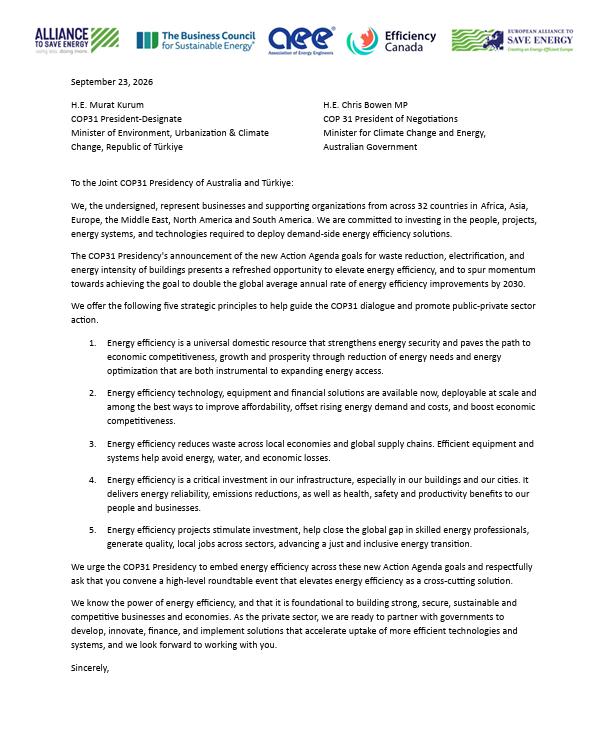
BCSE is joining businesses and organizations from around the world to elevate energy efficiency as a critical solution for achieving global climate and energy goals. Through a global business letter supported by over 200 companies, trade associations and other organizations, BCSE is calling for greater recognition of energy efficiency as a priority in global climate action, including at COP 31.
Read the global business letter here.
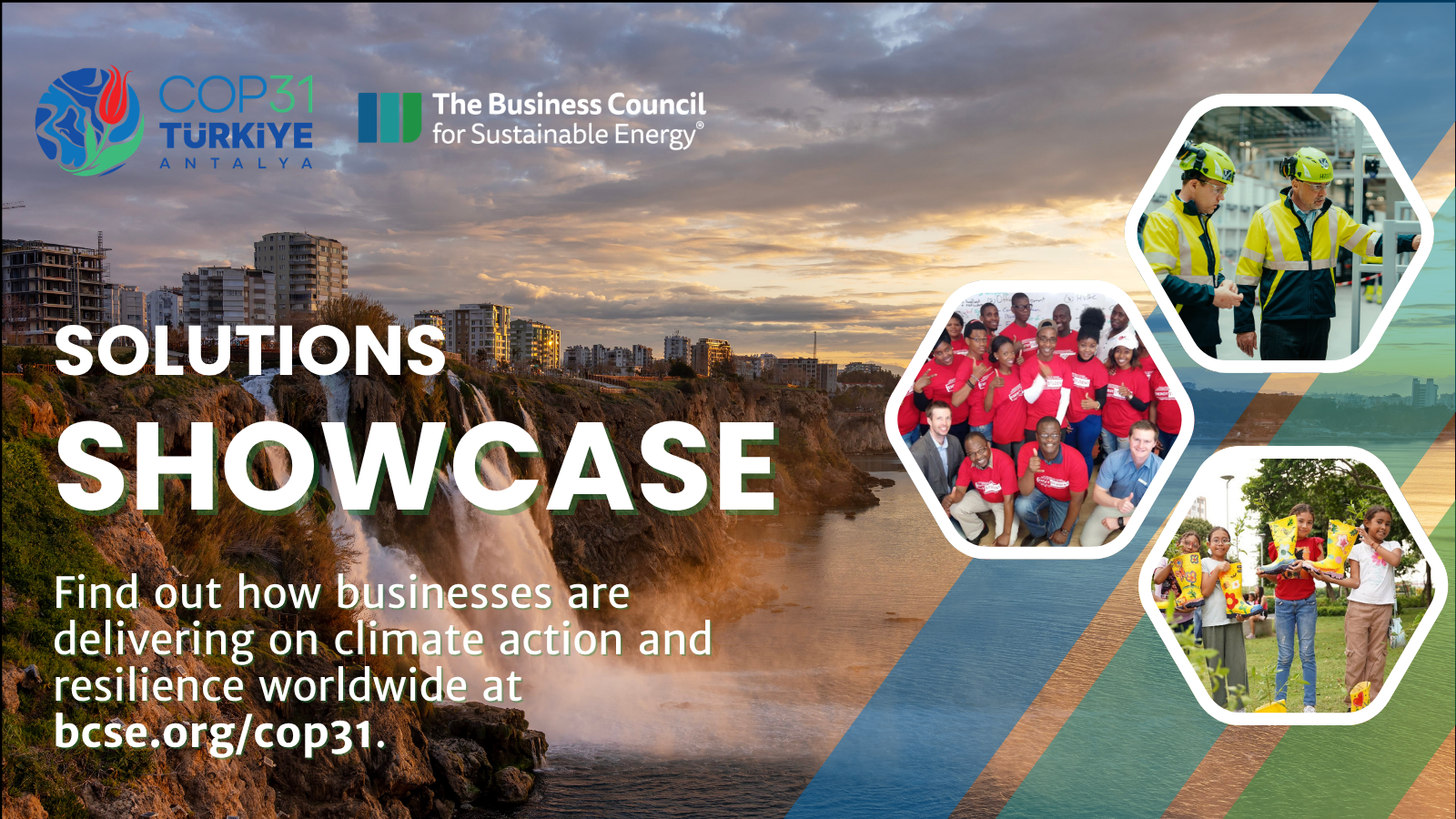
BCSE Solutions Showcase
At COP 31, BCSE is highlighting case studies from its members that demonstrate how proven sustainable energy technologies and business solutions are delivering emissions reductions, strengthening energy security, and supporting economic growth. These real-world examples underscore the opportunity to accelerate climate action by scaling solutions already available today.
Frequently Asked Questions
Who is in the BCSE delegation to COP 31?
Learn more about the companies, organizations, and partners that are a part of BCSE’s delegation to COP 31.
What are BCSE’s objectives for COP 31?
At COP 31, the BCSE coalition is committed to work with governments, businesses, and stakeholders to:
Deliver Solutions
- Foster dialogue on accelerating deployment of energy efficiency and sustainable energy solutions to meet climate goals, expand energy access and meet rising energy demand.
- Bring forward BCSE members’ real-world implementation experience.
- Champion durable policy and market signals that support investment and deployment.
Unlock Ambition
- Demonstrate business support for ambitious global goals and practical pathways to achieve them.
- Elevate energy efficiency as an enabler across the COP 31 Global Climate Action Agenda.
- Advance international collaboration to expand access to climate finance and investment for mitigation and adaptation.
- Support efforts to turn nationally determined contributions (NDCs) and global commitments into investable projects.
Accelerate Deployment
Continue to build momentum and highlight how countries can work with the private sector to:
- Double the global rate of energy efficiency improvements by 2030;
- Triple renewable energy capacity globally by 2030;
- Increase global energy storage to 1.5 terawatt hours by 2030
- Accelerate methane emissions reductions
- Reduce road transport emissions
- Build net-zero emissions systems by mid-century
- Quadruple the production and use of sustainable fuels by 2035; and
- Advance COP 31 goals for electrification, waste reduction and building energy intensity.
Learn more in BCSE’s COP 31 position paper.
Why does BCSE attend the annual Conference of the Parties (COP)?
Established in 1992 in advance of the first Earth Summit or United Nations Conference on Environment and Development (UNCED), BCSE has been an accredited business observer to the United Nations for more than 30 years.
BCSE has led a delegation to each of the three UNCED Summits (1992, 2002, 2012) and has had a presence at nearly all the United Nations Framework Convention on Climate Change (UNFCCC) annual Conference of the Parties (COP) sessions and most inter-sessional meetings.
BCSE attends the COP with these guiding objectives to:
- Ensure a broad portfolio of energy efficiency, clean energy and decarbonization solutions are utilized to close the global emissions gap and to meet national mitigation and adaptation goals.
- Share implementation experiences, challenges, and opportunities – from community engagement to technology deployment – with governments and stakeholders.
- Discuss the important role of clear and predictable policy frameworks, market-based mechanisms, capacity building, and partnership with the private sector to foster greater climate action.
Businesses in the BCSE delegation are deploying the energy efficiency and sustainable energy solutions needed to decarbonize economies. Business voices are needed at COP to provide insight on what policies best catalyze investment and deployment, based on local, national and regional conditions.
What is a typical day-in-the life at COP for BCSE?
The day for BCSE begins with preparation and review of the latest news out of COP and the UNFCCC Daily Programme, as well as a check-in at the daily business and industry NGO (BINGO) briefing hosted by the International Chamber of Commerce to get oriented for the day.
Throughout the two weeks of COP, BCSE’s delegation works to support the international negotiations by bringing private sector expertise to discussions on ambition, mitigation, adaptation, technology, markets and more.
As implementors and providers of solutions, the Global Climate Action Agenda is also an important area of focus for BCSE engagement. BCSE member companies offer technology solutions, services and market expertise as part of Action Agenda activities that help countries and communities reduce global greenhouse gas emissions, increase resilience, and meet their nationally-determined goals.
Although day-by-day schedules vary, BCSE’s delegation engages in this advocacy at COP by:
- Meeting with national and sub-national governments to share the importance of using policy tools to broaden the market for a broad portfolio of energy efficiency and sustainable energy solutions.
- Demonstrate how the private sector can help the public sector achieve its climate mitigation and adaptation goals.
- Meeting with U.S. and international civil society stakeholders to listen and learn and to identify ways to work together to accelerate the energy transition.
- Convene global partners to discuss strategies for implementation of global stock take goals for the energy transition, sustainable fuels, and more.
- Connect members to share their business views at side events, exhibits, press conferences, and other events held in the blue zone.
- Attending conferences held outside of the blue zone to network and share our views.
What is the energy transition?
BCSE views the ongoing energy transition as an economic opportunity to transform how we produce and use energy, reducing greenhouse gas emissions while meeting growing demand for affordable, reliable and secure energy. BCSE represents private sector companies that develop, finance and deploy proven energy efficiency and sustainable energy solutions to reduce emissions and accelerate the energy transition.
BCSE advocates for the deployment of a broad portfolio of solutions that can be tailored to regional and local circumstances. As electricity demand grows and energy systems evolve, sustained investment in modern infrastructure, supportive policies and market certainty will be essential to accelerating deployment. That deployment requires continued investment in developing the workforce that is needed. Currently in the United States, industries in BCSE’s coalition employ over 3 million people and include small to large-sized companies.
The transition will take time, and pathways will vary across countries and communities. Success requires collaboration among businesses, governments and other stakeholders to overcome financing and infrastructure challenges, engage affected communities and ensure the benefits of the transition are widely shared. The private sector has a critical role to play but cannot deliver this transformation alone.
Through its advocacy, BCSE works to advance the policies, partnerships and market conditions needed to scale sustainable energy solutions. BCSE’s annual Sustainable Energy in America Factbook, produced in partnership with BloombergNEF, tracks the evolution of U.S. energy markets and highlights investment and deployment trends shaping the energy transition.
What are nationally-determined contributions (NDCs) and why do they matter to the energy transition?
Nationally Determined Contributions (NDCs) are countries’ climate action plans under the Paris Agreement, outlining their commitments to reduce greenhouse gas emissions and adapt to climate change. In 2025, countries were called upon to submit updated NDCs with emissions reduction targets for 2035, helping chart the next decade of global climate action.
While the latest commitments represent progress, a significant gap remains between countries’ climate ambitions and the emissions reductions needed to meet the Paris Agreement’s goals. According to the UN Environment Programme’s 2026 Emissions Gap Report, full implementation of current NDCs would put the world on a pathway toward 2.3–2.6°C of warming this century, well above the Paris Agreement’s 1.5°C goal.
Accelerating the deployment of energy efficiency, renewable energy and other sustainable energy solutions will be critical to translating national commitments into measurable emissions reductions.
Increased international cooperation, as well as public and private sector partnerships, are necessary to close the ambition and implementation gaps while also supporting economic growth and energy security.
Why is international climate finance important to BCSE?
BCSE recognizes the critical role of international finance flows – both public and private – in advancing global climate cooperation and delivering emissions reductions at scale. The Baku to Belém Roadmap, developed under the COP 29 and COP 30 Presidencies, outlines pathways to mobilize at least $1.3 trillion annually by 2035 for climate action in developing countries, including through increased private sector investment.
At home in Washington, DC, BCSE consistently advocates for robust U.S. federal funding to support international energy infrastructure development, including the deployment of energy efficiency and sustainable energy technologies.
Schedule of Events
BCSE In Action – News

Built for Resilience: Scaling Cooling, Efficient Infrastructure and Local Prosperity
November 12, 2026

Advancing Progress on Climate, Energy Demand, and Affordability in the United States
November 12, 2026

Implementing America’s Energy Transition: Market Trends and Practical Pathways Forward
November 13, 2026
300+ Global Businesses and Organizations Urge COP31 Presidency to Put Energy Efficiency at the Heart of Action Agenda
More than 300 businesses and organizations representing 39 countries and territories are calling on the COP31 Presidency of Türkiye and Australia to put energy efficiency at the center of efforts to deliver on the conference’s Action Agenda. read more
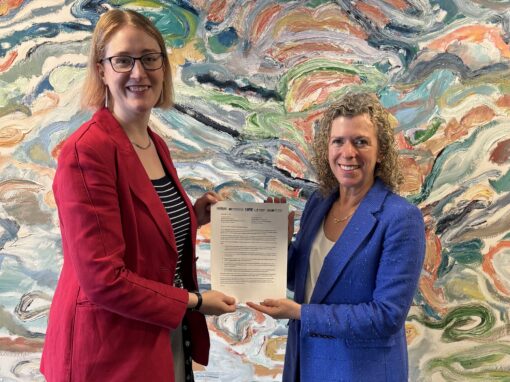
BCSE Delivers Global Business Letter Supporting Energy Efficiency to COP 31 Presidency
On September 23, 197 businesses and supporting organizations from 32 countries sent a letter to the incoming COP31 Presidency of Australia and Türkiye, calling for the leaders of the upcoming UN Climate Change Conference (COP 31) in November to elevate energy efficiency. read more
Sponsors

















Market Trends & Factbook
The 2026 edition of the Sustainable Energy in America Factbook provides up-to-date, accurate market intelligence about the broad range of industries that are contributing to the country’s move toward more efficient energy usage and cleaner energy production.