
In the spirit of the COP 31 Presidency’s emphasis on its Action Agenda Priorities – the Business Council for Sustainable Energy (BCSE) will lead a business delegation to COP 31 in Antalya, Türkiye that will bring forward credible solutions, partnerships, investments, and ideas to accelerate the energy transition and decarbonize agriculture, buildings, industry, and transportation. This case study is part of BCSE’s Solutions Showcase to deliver emissions reductions, increase resilience, and meet energy transition goals worldwide.
Highlights:
- 5 MW / 20 MWh of storage capacity.
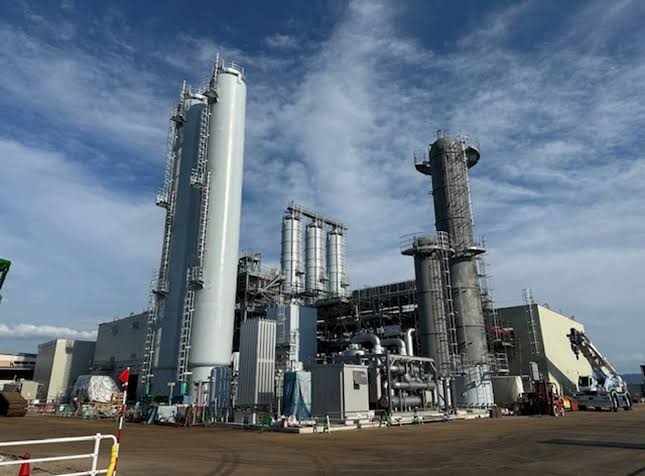
- World’s first LNG integrated Liquid Air Energy Storage (LAES) plant.
- Zero emissions operation, with excess cold from the LNG terminal reused to boost efficiency.
- Provides grid stability services, including inertia, reactive power and short circuit capacity.
Case Study:
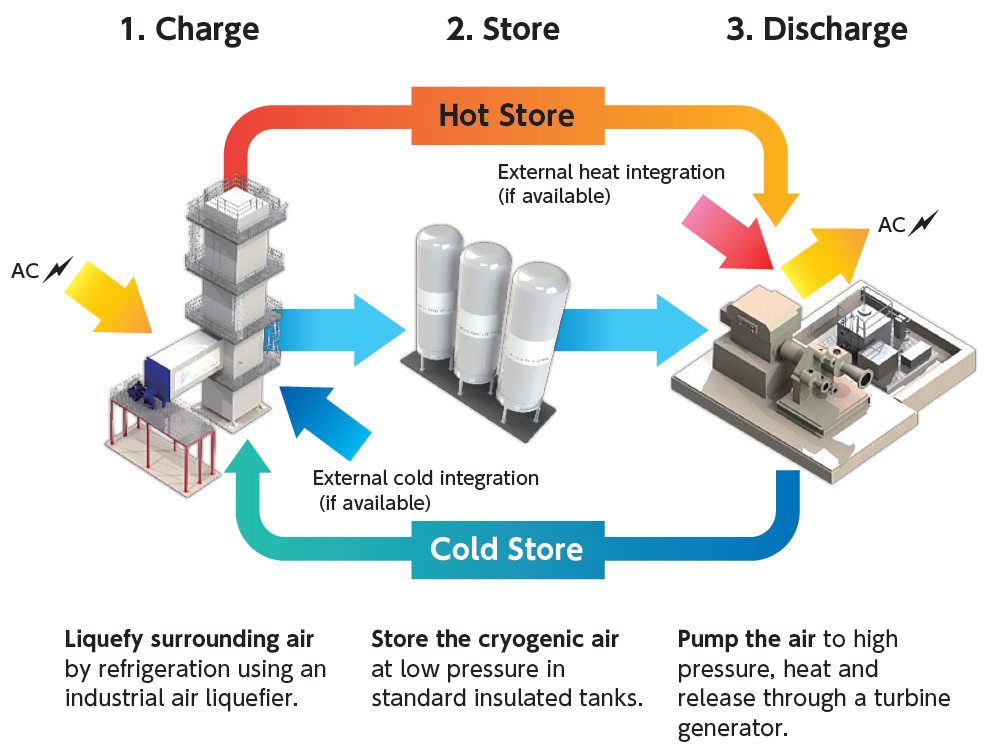
Sumitomo Heavy Industries, Ltd. (SHI) is pioneering a new way to store clean energy: turning air itself into a battery. Liquid Air Energy Storage (LAES) cools ambient air into liquid form and later expands it back into gas to drive turbines, delivering reliable, zero-emissions power when it’s needed most.
In Hiroshima, Sumitomo Heavy Industries, Ltd. (SHI) has built the world’s first commercial LAES plant connected to a liquefied natural gas (LNG) terminal. By reusing the terminal’s excess cold, the system boosts efficiency and avoids emissions that would otherwise come from gas-fired boilers. The facility will provide clean, reliable electricity while also delivering grid stability services such as inertia, reactive power, and short-circuit capacity.
This effort supports Japan’s 7th Strategic Energy Plan, which calls for long duration energy storage like LAES to integrate renewables and put the country on track for carbon neutrality by 2050.
How LAES Works
LAES harnesses the power of air to provide a reliable, flexible, and sustainable energy storage solution:
- Air is cooled into a liquid and stored in insulated, pressurised tanks.
- When needed, the liquid air is reconverted to a gas and used to generate electricity.
- Waste heat and cold from charging or discharging are reused to boost efficiency.
Conclusion
By advancing this technology, Japan can harness the power of LAES to deliver clean energy at scale, even at the level of entire power grids. Sumitomo Heavy Industries’ world-first project in Hiroshima delivers a solution that keeps the system stable, scales up easily, works almost anywhere, and produces zero emissions, making it a truly flexible tool for the future and a key step toward Japan’s 2050 carbon neutrality strategy.